


Never underestimate the importance of proper engineering & drainage design in golf course construction

Why investing in engineering during the pre-construction planning stages can save millions in future repairs, lost revenue and operational disruption.
November 2026 | By Martin Moore – President, Flagstick GCCM
When the Rain Came
In late September 2026, Bangkok and its surrounding provinces experienced more than 350 mm of rainfall in approximately 48 hours. All 50 districts of Bangkok were declared flood disaster areas, with many residents were drawing comparisons to the devastating floods of 2011.
For numerous golf courses throughout the region, the consequences were severe. Significant erosion damage occurred, while greens, fairways and bunkers disappeared beneath standing water. Many clubs were forced to close for weeks, with some facing months of extensive repair and restoration work.
The financial impact extends far beyond the immediate cost of repairs. Lost green fee revenue, cancelled tournaments and corporate events, increased maintenance expenses and frustrated members all contribute to the long-term consequences of a poorly drained golf course.
However, the same storm also demonstrated on some golf courses what can be achieved when proper engineering and drainage design are prioritized from the very beginning of a golf course development.
Why Flat, Low-Lying Sites Are So Vulnerable
The Central Plains surrounding Bangkok are barely above sea level. Many golf courses in the region have been developed on former rice paddies characterized by flat terrain, heavy clay soils, high groundwater tables and limited natural drainage outlets.
Under these conditions, rainfall has very few places to go. Once the ground becomes saturated, surface water accumulates rapidly, and without sufficient storage, drainage infrastructure and pumping capacity, flooding becomes inevitable.
On sites such as these, drainage cannot be an after thought or something addressed during construction. It must be a fundamental component of the engineering and design process, well before the first bulldozer arrives.
Once earthworks are completed, drainage infrastructure installed and turfgrass established, correcting fundamental design deficiencies can become an extremely expensive and disruptive exercise. In many cases, substantial sections of the golf course must be excavated and reconstructed. Getting it right from the beginning is considerably more cost-effective than attempting to correct it later.
Stonehill, Thailand: Proof That Proper Engineering Works
Stonehill golf course, located in Pathum Thani just north of Bangkok, experienced the same extreme rainfall event, yet the outcome was remarkably different. The 138-hectare golf course site was originally flat, featureless land consisting predominantly of heavy clay soils and former rice paddies, situated close to the Chao Phraya River.
Designed by renowned golf course architect Kyle Phillips, with construction management undertaken by Flagstick, Stonehill was developed with a comprehensive engineering and drainage strategy integrated into the original golf course design. One of the most important features was the construction of an elevated perimeter berm surrounding the property. This engineered barrier helps prevent external floodwater from surrounding land and waterways entering the golf course during significant rainfall events.
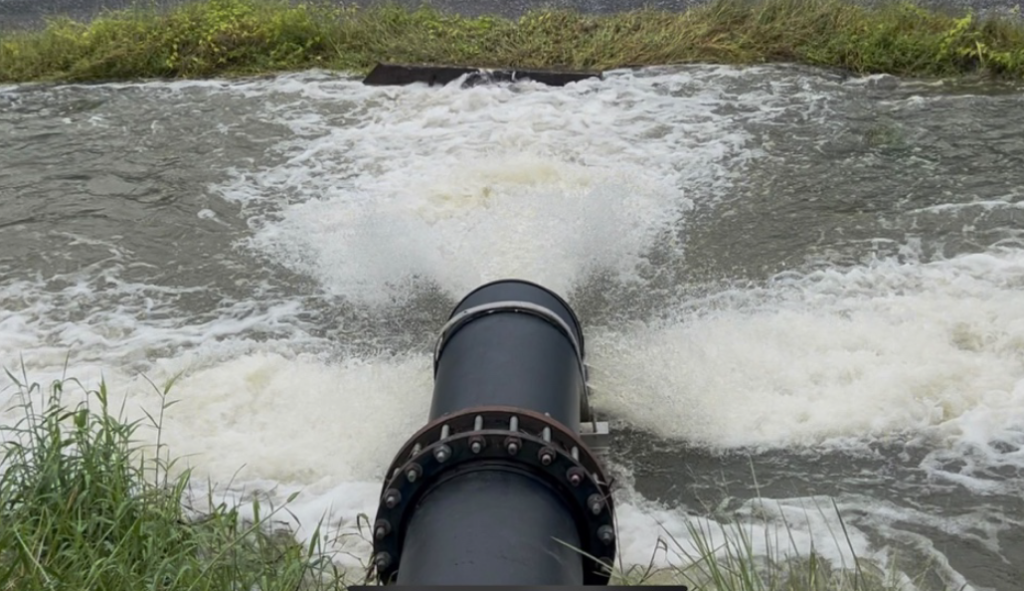
Within the property, an extensive network of interconnected streams, lakes and underground drainage pipes were carefully incorporated into the golf course architecture. Rather than appearing as purely functional drainage infrastructure, these water features were designed to complement the landscape, creating both visual interest and strategic golfing features while performing an essential engineering role. Stormwater is collected and directed through this interconnected system towards a large storage lake situated at the lowest point on the eastern side of the property. At this location, a substantial pumping station transfers up to 25,000 gallons a minute of collected stormwater over the perimeter berm into an external canal system connected to the nearby Chao Phraya River.
This combination of perimeter flood protection, engineered surface gradients, subsurface drainage, interconnected water storage and high-capacity pumping allows the golf course to manage significant rainfall events while maintaining control over water levels within the property.
The Results Speak for Themselves – Following the September storm, Stonehill reopened for golf the day after the heavy rainfall stopped. Within approximately 24 hours, fairways could be mowed, maintenance operations resumed and golf carts could travel across the fairways and roughs. While numerous neighboring golf courses remained inundated, with limited options for removing accumulated water, Stonehill members were back playing golf. This was not simply good fortune. It was the result of detailed planning, sound engineering, experienced construction management and a substantial investment in drainage infrastructure long before the golf course opened. The real success of a drainage system is not necessarily how it performs during normal rainfall, but how effectively it protects the golf course during extreme weather events.

Key Considerations During Golf Course Pre-Planning
Effective drainage is not a single pipe, lake, or pumping station. It is an integrated system in which every component must work together. Several critical elements should be addressed during the initial golf course planning and design stages.
1. Accurate Site Surveys and Hydrological Studies
A comprehensive understanding of the site is essential before any earthworks commence. Detailed topographical surveys, soil investigations, groundwater assessments and historical flood records must be evaluated. Equally important is understanding how surrounding properties, drainage canals and waterways behave during major rainfall events. Designing solely around average rainfall conditions can leave a golf course extremely vulnerable when substantial storms occur.
2. Perimeter Flood Protection
On low-lying sites, preventing external floodwater from entering the property can be just as important as removing rainfall generated within the golf course. Engineered perimeter berms, levees and elevated boundary grades should be considered where appropriate. Their design must account for realistic flood levels, potential overtopping, seepage, structural stability and future changes to surrounding land development.
3. Earthworks That Create Positive Drainage
Flat terrain requires careful earthwork planning to establish sufficient gradients for surface water movement. Excavating lakes and drainage channels can generate valuable fill material that allows fairways, tees, greens and other playing surfaces to be elevated above surrounding low points. Proper grading ensures that water moves efficiently away from critical playing areas and towards designated collection points. This work must be closely coordinated between the golf course architect and engineering consultants so that drainage performance, playability and visual design are achieved together.
4. Lakes and Streams as Stormwater Storage
Lakes and streams should not be considered purely aesthetic features. When correctly engineered, an interconnected lake and stream network provides substantial stormwater detention capacity, allowing runoff to be temporarily stored before being discharged from the property. Storage volumes, water levels, hydraulic connections, outlet structures and pumping requirements should all be calculated during the design phase. Importantly, pumping capacity must be evaluated against expected stormwater inflows, available storage and the water levels of receiving canals during major storms.
5. Comprehensive Subsurface Drainage
Subsurface drainage is critical for maintaining firm, playable turfgrass surfaces, particularly on heavy clay soils with naturally poor infiltration and permeability. A properly designed network beneath fairways, greens, tees and bunkers helps remove excess water from the rootzone and directs it towards the broader drainage system. At Stonehill, more than 100,000 linear meters of subsurface drainage were installed during construction. Combined with extensive sand capping over the underlying clay soils, this infrastructure plays a major role in improving surface drainage, turfgrass growing conditions and the speed at which the golf course can return to play following heavy rainfall. The objective is not simply to remove visible standing water, but to create consistently firm and healthy playing surfaces throughout the year.
6. Engineering, Golf Course Architecture and Construction Management Working Together
Perhaps the most important consideration is ensuring that the engineering consultants, golf course architect and construction management team are fully aligned from the earliest stages of development. Each discipline brings essential expertise. The engineer must understand hydrology, earthworks, drainage infrastructure and flood protection. The golf course architect must integrate these requirements into a visually appealing, strategic and playable golf course. The construction management team must ensure that the engineering and design intent can be practically implemented, correctly sequenced, quality-controlled and delivered within the project budget. When these disciplines work together from the beginning, the result is a golf course that not only looks exceptional but also performs under demanding environmental conditions.
Pay Now, or Pay Much More Later
Some of the most important investments in golf course construction are also the least visible once the course opens. Golfers rarely see the kilometers of underground drainage pipes, the engineering behind perimeter berms, the calculated storage capacity of lakes or the pumping infrastructure required to keep a golf course operational. Consequently, these elements can sometimes become targets for cost reductions during project budgeting, particularly when competing against more visible features such as elaborate landscaping, signature golf holes or clubhouse facilities. However, reducing expenditure on essential engineering and drainage infrastructure can prove to be a very expensive decision.
The September 2026 rainfall event around Bangkok provided a powerful reminder of the consequences.
For golf courses that suffered extensive flooding, the costs extend beyond damaged turfgrass, bunkers and infrastructure. Weeks or months of closure can mean significant lost revenue, interrupted maintenance programs, cancelled events and lasting damage to member satisfaction and club reputation.
By comparison, a well-engineered golf course has a much greater opportunity to recover quickly, protect its assets and maintain business continuity. For owners, developers and consultants planning a new golf course or major renovation, particularly on flat, low-lying or flood-prone land, the message is straightforward: Invest in proper engineering and drainage design during the pre-planning stages. Engage experienced professionals, understand the site’s limitations and ensure that every component of the drainage system is designed to work together.
Great golf course architecture is not just about what golfers see above the ground. It is equally dependent on the engineering infrastructure beneath it. The true value of that investment becomes evident when the next major storm arrives. And in today’s increasingly unpredictable weather conditions, the question is not simply if that storm will come, but when.
Sources:
• AP: Heavy rain and flooding in Bangkok disrupts traffic and prompts evacuations (27/09/2026)
• Golf Course Architecture: Stonehill, a new level for Thai golf (08/2024)